


By Dr. Sarah Slater, DNP, APRN, CPNP-PC | Balanced Kids MN | Twin Cities, Minnesota
Reposted from The Centered Care Directory
If you’ve ever wondered whether stepping outside insurance-based pediatric care means settling for less, shorter visits, less oversight, and less legitimacy, You’re not alone. It’s one of the most common fears parents raise when they first hear about cash-based pediatric care. Many are surprised to learn that cash based pediatric care is not only comprehensive, but also affordable and accessible, and sometimes better.
I’m Dr. Sarah Slater, a pediatric nurse practitioner serving families in-person throughout the Twin Cities, Minnesota. Here’s what I learned after years in the hospital system that led me to build something different.
Why I left insurance-based pediatric care?
There’s a moment that still sits with me from my hospital years.
We had a research grant to study red light therapy for pediatric cancer patients, specifically for the mouth sores between chemo cycles severe enough to land a kid back in the hospital. The grant covered the device and funded the study. Clinicians wanted to offer it. Families wanted it. It took five minutes, and it worked.
Eventually, administration decided to bill it per visit, knowing full well insurance likely wouldn’t cover it. A family with resources could pay out of pocket and get the therapy as often as needed, sometimes daily. A family without those resources couldn’t.
Meaning that children with the same diagnosis, same treatment, same hospital, ended up with different outcomes that were dependent on their family’s bank account. We ended up not offering the service for a stretch of time over the fight about how to make it “equitable,” which in practice meant nobody got it.
That one still gets me. Not because it took up a lot of my time. It didn’t. Because it was such a clear example of care that existed, that worked, that clinicians and families both wanted, and a decision that had nothing to do with medicine blocked it.
Unfortunately, this wasn’t the only version of that fight. I ran into it again around medical cannabis education. I had cancer patients who held a medical certification, whose families needed real, current, evidence-based information, and I wasn’t able to give it to them because of hospital liability concerns.
Not because my colleagues disagreed. My coworkers saw the same need I did. Administration drew a line around what it allowed us to discuss with families who, by every legal and medical standard, had a right to that conversation.
The Everyday Reality Every Practitioner Knows
Layer that on top of the everyday reality of hospital medicine:
- Fifteen-minute visits
- High Patient Volume
- Declined Authorization for Treatment
And the particular kind of burnout that comes from knowing you’re giving good, technically sound care while also knowing the family in front of you doesn’t feel supported, because there wasn’t time to make them feel that way.
Good clinical care and a family feeling well cared for are not the same thing, and insurance-based systems are built around the first, not the second.
Nonetheless, I didn’t leave hospital medicine because I stopped caring about it. I left because I kept being put in a position where the best available evidence, the thing I’m supposed to base my care on, ran up against what administration would allow, what insurance would pay for, or what was “equitable” only in the sense that it made the inequity official.
Are more pediatric practitioners leaving insurance-based practice?
My story isn’t an outlier. It’s part of a much larger shift happening in primary care right now, including here in Minnesota.
Direct, cash-based primary care has grown sharply in recent years nationwide:
- Membership in direct primary care models climbed 837% between 2017 and 2025, now reaching roughly 409 active members per 100,000 Americans across 49 states, according to Hint Health’s 2026 Direct Primary Care Trends Report.
- The number of direct primary care practices nationwide has grown past 3,000, with new practices opening at a double-digit annual pace.
- Clinicians in direct-care models spend roughly 86% of their time in direct patient care, compared to about 59% for clinicians in traditional insurance-based practices. Research published in the Journal of the American Board of Family Medicine, as reported by Top Doctor Magazine.
- Pediatrics and family medicine remain among the lowest-compensated specialties in traditional insurance-based systems, according to Medscape’s 2026 Physician Compensation Report.
That time gap and pay structure are factors driving a growing number of primary care and pediatric clinicians, including cash based pediatric care practitioners in the Twin Cities, toward practice models in which their time and clinical judgment aren’t dictated by a billing code.
Can you really do comprehensive pediatric care in the home in the Twin Cities?
This is the biggest misconception I run into. That home-based care is somehow lesser, or limited to quick check-ins. It isn’t. Comprehensive care doesn’t require a clinic building; it requires:
- Time
- Access to Evidence
- A clinician who isn’t boxed in by what a billing code will approve.
Balanced Kids is what I built instead of returning to hospital-based practice, serving families in-person throughout the Twin Cities, Minnesota.
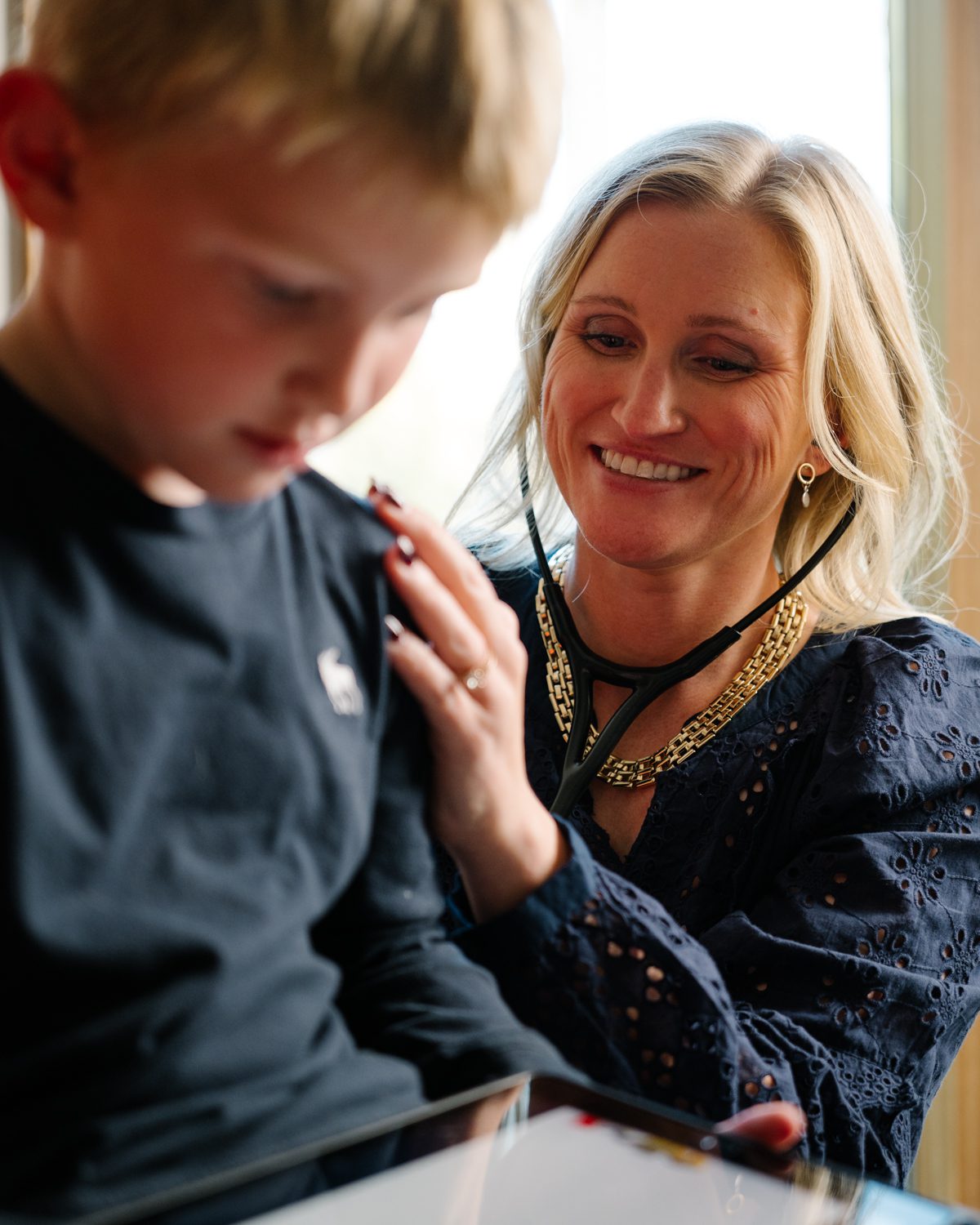
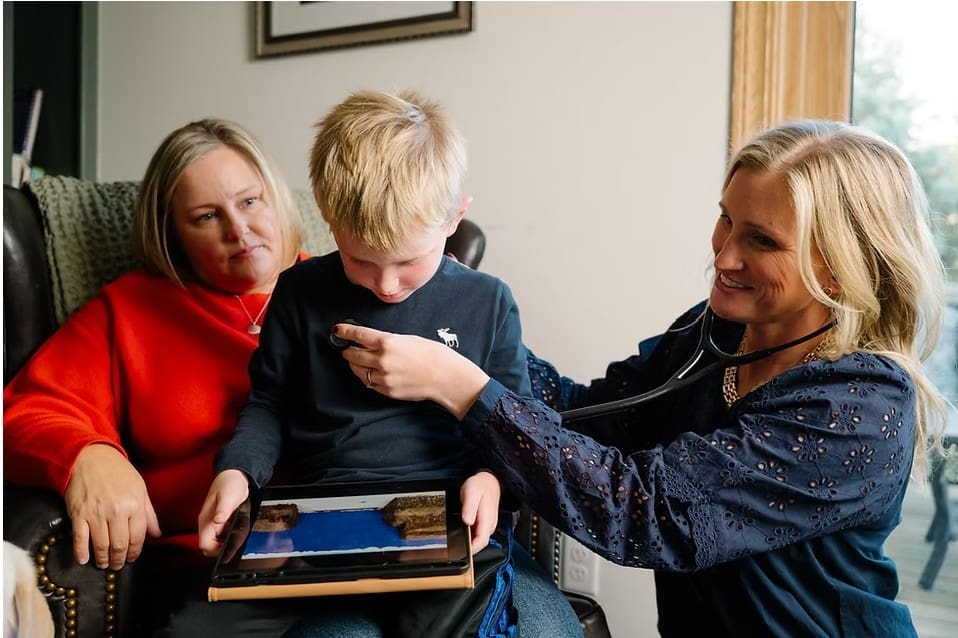
In-home visits, so care actually happens in a family’s real life rather than in a clinic hallway. Direct access to me by text. Visits that run as long as they need to, not as long as a billing code allows. And no administrator sitting between me and the most current evidence when a family needs it.
If a family needs to talk about:
- Integrative Options
- Medical Cannabis
- Immunizations
- Other topics mainstream medicine often avoids
Or anything else backed by real research, we talk about it. Not because it’s trendy, but because it’s relevant to their kid, and I have both the time and the freedom to bring it into the conversation.
Is cash-based pediatric care actually affordable?
This is the part families are often most surprised by. Stepping outside insurance doesn’t automatically mean stepping into something more expensive. At times, cash based pediatric care works out to be more affordable than an insurance-based model. Once you factor in what a family is actually paying for:
- An appointment with enough time to get the care they deserve.
- Direct access to their clinician.
- A plan that doesn’t require multiple visits to get a straight answer.
The goal isn’t to convince anyone that insurance is wrong for them. It’s to make sure families know this option exists.
That’s the whole reason Balanced Kids exists, not to reinvent medicine, just to practice it without something standing between good evidence and the family who needs it.
Frequently Asked Questions
Here are a few questions I get asked often.
Is pediatric care without insurance legitimate and safe?
Yes. Cash-based and direct-care pediatric practitioners hold the same licensure, training, and clinical standards as insurance-based providers. What changes is the payment model, not the credentials or oversight behind the care.
Is in-home pediatric care as thorough as a clinic visit?
It can be more thorough. Comprehensive care depends on time and access to current evidence, not a physical building. In-home visits often allow for longer appointments and more direct follow-up than a standard clinic visit permits.
Can I use my HSA for cash-based pediatric care?
HSA and pediatric-care rules vary by provider type and are shifting quickly. A 2026 federal policy change expanded HSA eligibility for direct-care models. Ask your practitioner directly what applies to your specific plan and situation.
Why are pediatric practitioners moving toward cash-based and direct-care models?
Many cite the same reasons:
- More time with patients
- Less administrative interference in clinical decisions
- The ability to practice based on current evidence rather than what a billing code allows.
National data shows this shift accelerating industry-wide, not just among individual practitioners.
Does cash-based pediatric care cost more than insurance-based care?
Not necessarily. Families often find that a transparent, all-in visit fee compares favorably to the combined cost of premiums, deductibles, copays, and the time lost to multiple short visits under an insurance-based model.
Is there an in-home pediatric practitioner in the Twin Cities who doesn’t take insurance?
Yes. I provide in-person, in-home pediatric care for families throughout the Twin Cities, Minnesota, through Balanced Kids MN, on a cash-based model.
Where can I find a cash-based pediatric practitioner near me?
Vetted cash-based and hybrid practitioners, including pediatric specialists in Minnesota and across the country, are searchable by location and specialty at healthoverwealth.us.
How to Work With Me
If this resonates with you, I’d love to meet your family.
I see patients in person and in home settings throughout the Twin Cities, Minnesota. So, if you’re local and looking for a pediatric team that has the time to actually get to know your child, reach out. I’ll walk you through how visits work and answer any questions before you commit to anything.
For educational purposes only. Not medical advice. Always consult a qualified healthcare professional for your child’s specific situation.
Sources Used
- Hint Health, 2026 Direct Primary Care Trends Report
- Top Doctor Magazine, summarizing DPC time-in-care research from the Journal of the American Board of Family Medicine
- Medscape, 2026 Physician Compensation Report






leave a comment
+ show Comments